GCSE Exam Anxiety: A Parent's Honest Guide to Your Child's Stress, and Your Own
Exam Anxiety

Type GCSE exam anxiety into a search bar and most of what comes back is aimed at your child: how to spot it, how to calm it, how to talk about it. Search a little longer and a second, quieter fact turns up. GCSE exam anxiety parents experience is just as real as their child's, and almost nobody writes about that part.
79% of parents say they feel stressed during their child's exam season, more stressed, on average, than the young people actually sitting the exams (Aviva, May 2025). You may not have seen that figure before, and it says something most parenting advice skips past: the exam room isn't the only place this anxiety shows up. It shows in your home environment and your day to day schedule too, even when your son or daughter isn't around.
This guide is for readers who can relate to the following experiences. It's for the parent who has noticed their child is more wound up than usual and wants to know what actually helps, as opposed to what just sounds helpful. And it's for the parent lying awake cataloguing everything that could go wrong, who hasn't found a single article that admits that's a normal thing to be doing.
These aren't two separate problems. They're connected. How calmly you carry your own worry has a direct, measurable effect on how your child carries theirs.
Quick Answer: Is GCSE Exam Anxiety Normal, and What Actually Helps
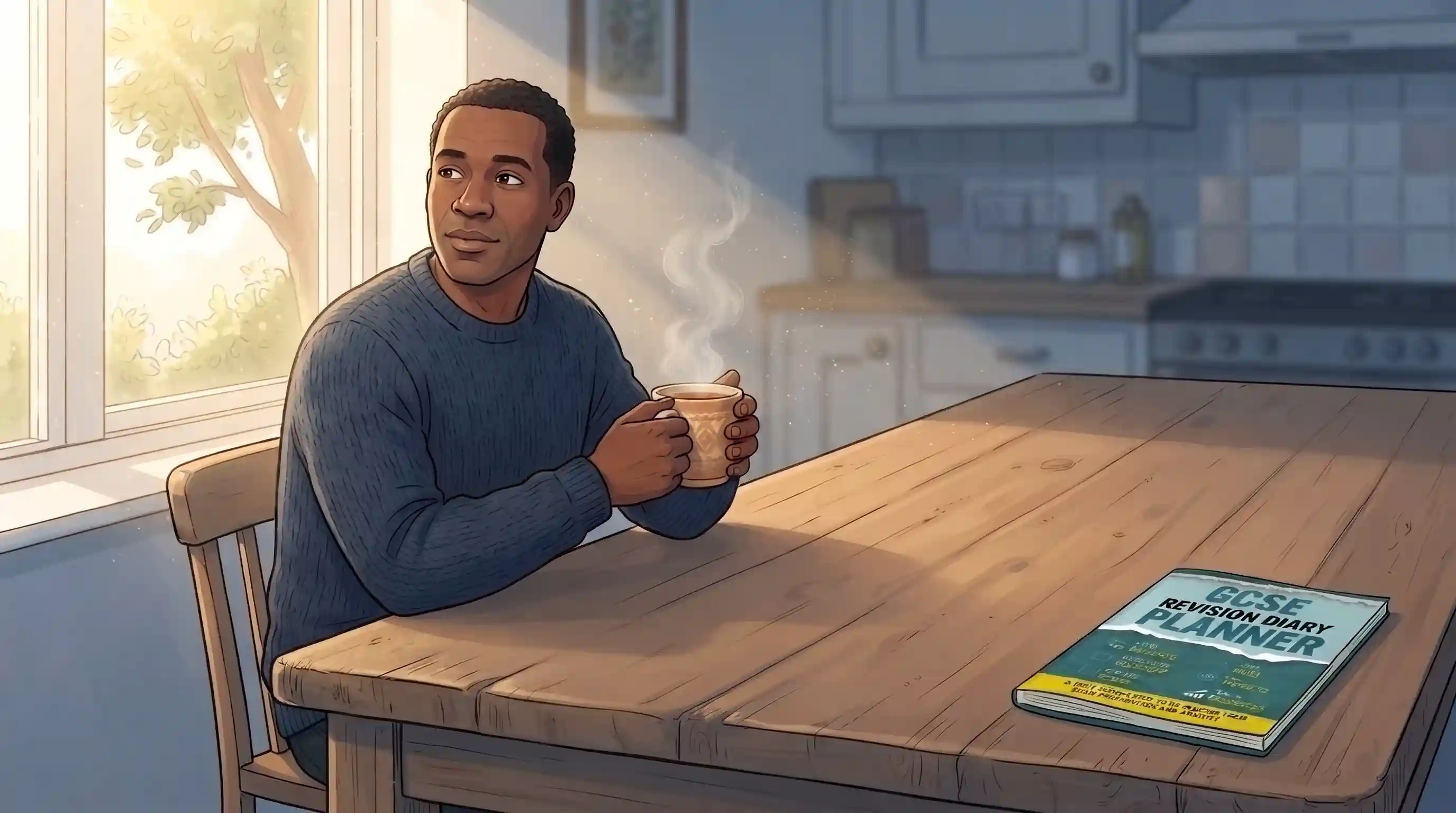
GCSE exam anxiety is extremely common on both sides of the family. One set of research puts the figure at around 85% of students experiencing some degree of exam anxiety. Another, separate, research study found parents reporting higher stress (79% versus 47%) to the students themselves. A useful amount of nervous energy sharpens focus. It becomes a problem when it stops your child revising, disrupts sleep for weeks rather than days, or starts affecting how they function day to day.
- •
Structured, visible preparation. Feeling ready is the single biggest lever against exam anxiety, and having an organised revision plan with clear tools to help make progress without procrastination is the key here.
- •
What you say, and don't say. Naming the feeling beats dismissing it. Comparisons to siblings or classmates make things worse, reliably.
- •
A calm, predictable home. Protected sleep, normal meals, and a clear line between revision time and downtime.
- •
Managing your own anxiety separately, rather than in front of your child, so it doesn't become one more thing they're carrying.
How Common Is GCSE Exam Anxiety? (The Numbers Parents Should Know)
Let's start with the scale of it, because it frames everything else in this guide. As we previously stated, research puts the figure at around 85% of GCSE students experiencing some degree of exam anxiety. That's not a niche problem affecting a fragile minority. It's close to universal.
There's an important distinction we need to highlight here: normal exam nerves versus something that needs more support. Normal nerves are motivating in small doses. They sharpen focus the week before a paper and fade once it's finished. Anxiety that needs attention is different in kind, not just degree: it persists for weeks rather than days, and it affects more than one area of life at once, sleep, appetite, mood, schoolwork, rather than showing up narrowly around one exam.
What Exam Anxiety Looks Like in Teenagers (Signs to Watch For)
Here's the pattern worth understanding properly, because it explains a lot of what looks like laziness and usually isn't. Anxiety makes revision itself feel threatening, in a way that not revising doesn't. Opening a mark scheme and confirming exactly what you don't know is a genuinely uncomfortable thing to do when you're already anxious about failing. Avoiding it removes the discomfort in the short term, at the cost of making the actual problem worse. This is the root of the pattern that shows up in a lot of "my child won't revise" conversations, and it's worth reading as anxiety-driven avoidance rather than simple reluctance to get started, which you might otherwise assume.
Telling the two apart in practice is genuinely difficult, and worth being honest about rather than pretending there's a clean test for it. In our own house, working out whether it was anxiety or just not knowing where to start was rarely obvious in the moment. The signal tended to be a specific lack of confidence in one subject or particular topic, rather than a general mood. It usually only surfaced through a proper one-to-one conversation at an opportune moment and not as a result of a general lecture about the importance of revising. We've tended to find that is true whether it's as teacher talking to our students about their coursework, or as a parent asking our daughter, directly and privately, how they're actually coping.
What to Say, and What Not to Say
Common Mistake
What tends to make anxiety worse: emphasising the consequences of failure, expressing your own anxiety in front of your child, comparing them to siblings or other students, and asking for constant updates on how much revision they've done. Each of these adds pressure without giving your child anything useful to act on. Comparison in particular shows up again and again in research on exam-season communication as one of the most damaging habits, even when it's meant as encouragement rather than criticism.
What Actually Helps
What actually helps is closer to acknowledgement than reassurance. "I can see this is really stressful" does more work than "don't worry, you'll be fine", because the second phrase, however kindly meant, tells your child their feeling isn't being taken seriously. Praising effort rather than predicted grade matters too, and so does keeping the timeframe short: today's session, not the whole exam, not the whole summer.
We learned this less from theory than we did from getting it wrong at first. Nagging rarely works the way it's meant to. In the classroom, it makes students switch off, because it feels like being told off and goes over their head. At home it's worse: it tends to create a confrontation instead, and once things have tipped into an argument, that revision session is lost anyway, along with whatever might have been achieved in it. The pattern we noticed most often was our daughter (or a student) agreeing just to make the nagging stop, without any actual engagement with what was said, with no noticeable behaviour change.
What worked better was closer to restoring perspective than pushing. Breaking down where our daughter currently stood, and naming, specifically, that she knew more now than she did last week or last month or before her mocks, then pointing at one small next thing to do. That stops a teenager fixating on the size of the whole task ahead and grounds them in something more manageable: I've made progress, here's the next bit, and I can do that.
Free: 5 Things to Say Tonight
A one-page script of five things to say instead of "have you started revising yet?", from a teacher of 22 years whose own daughter just went through Year 11.
Can Preparation Reduce Exam Anxiety? (Yes, Here's How)
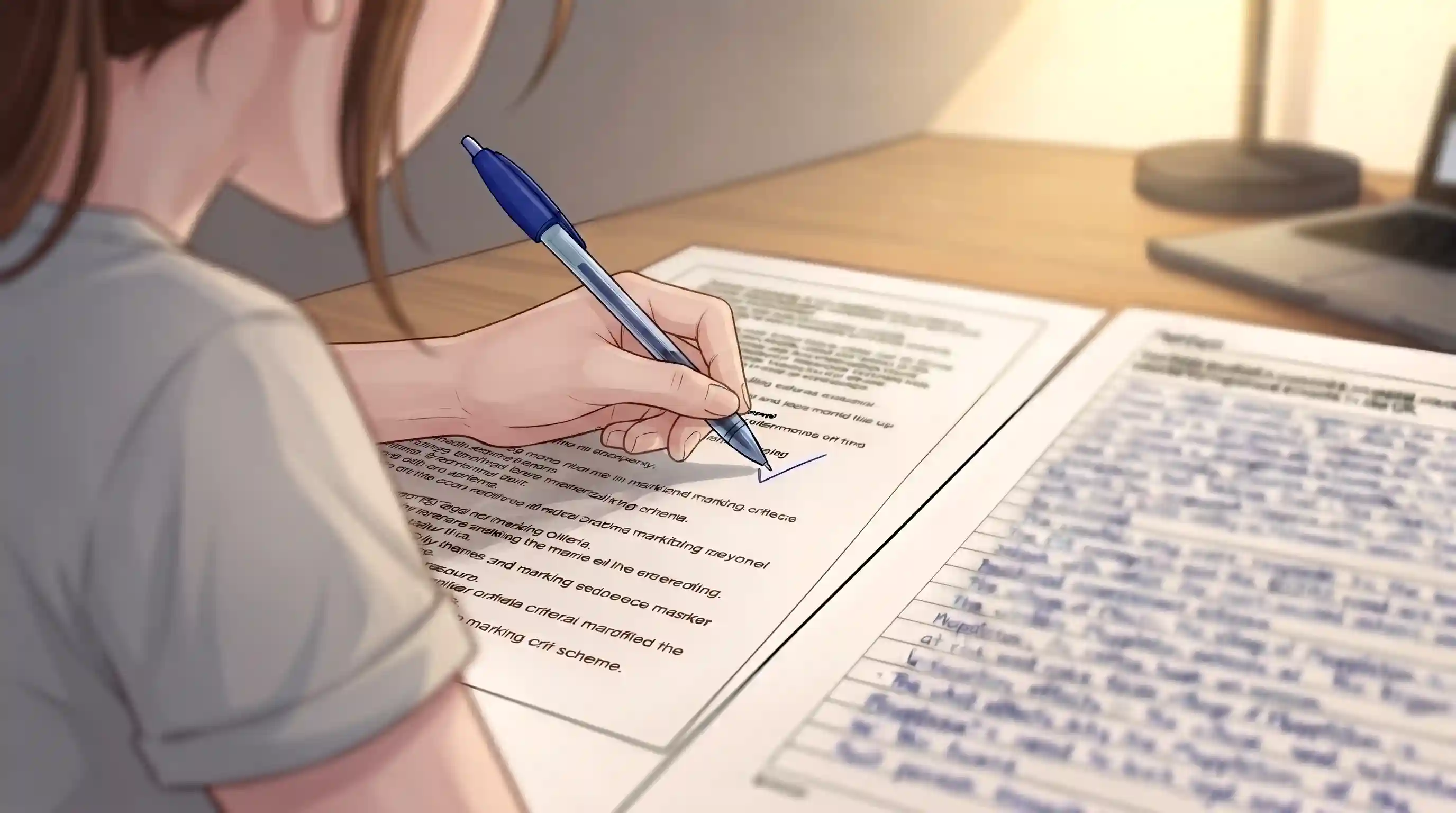
Past paper exam questions, and the mark schemes, do more of this work than almost any other revision method. This is because they take the biggest unknown, what will actually be asked and what actually earns marks, and make it known and practised in advance.
The trouble is that finding the right past papers can be unnecessarily time consuming. AQA, Pearson Edexcel, and Cambridge OCR each run their own exam board website, each with different navigation, and a parent or student first has to remember which board runs which subject before they can even start looking. What should take two minutes regularly takes twenty. Revision Desk's directory exists specifically to remove that friction: every major exam board's official past papers and mark schemes, searchable by subject in one place, with a student's own subjects saved so every return visit is instant.
Once a student is looking at the actual mark scheme rather than hunting for it, the AI assistant on the same site turns that mark scheme directly into active revision resources, quizzes, flashcards, and exam simulation, in a couple of clicks. The point isn't the technology. The point is that anxiety driven by not knowing what to expect has a genuinely practical answer, and it doesn't require a tutor to access it.
Find Past Papers and Mark Schemes in One Place
Revision Desk's directory organises AQA, Pearson Edexcel, and Cambridge OCR past papers and mark schemes, searchable by subject, no hunting through official board websites.
Creating a Calm Home Environment During GCSE Season
When to Be Worried, and When to Get Help
Your Own Anxiety, the Part Nobody Talks About
Being teachers ourselves didn't shelter us from the nagging worry that lots of parents face: had all her teachers actually given her everything she needed to be best prepared for each given subject? What about the specific subjects where she seemed less confident than the rest? At points, that tipped into a real feeling of helplessness, the sense that there wasn't much more we could directly do beyond being available.
What we actually did with it was straightforward, if not always comfortable. We stayed present without nagging, so that when she did want help, she knew it was there, and we could go and dig up better resources for whichever subject was worrying her that week and bring them back. And, just as importantly, we talked to each other about it, constantly, rather than processing all of it in front of her. That was a deliberate choice: protecting her from the full weight of how much we were thinking about it, while still checking in regularly enough that she never felt alone in it.
If it's 11pm and you're the one lying awake now, imagining everything that could go wrong: that's not a sign you're doing this badly. It's a sign you're paying attention. Find somewhere to put the worry that isn't in front of your child, whether that's a partner, a friend, or another parent going through exactly the same thing this year, and go back to what you can actually influence, which is mostly the preparation covered earlier in this guide.
After the Exams, What to Do with the Waiting
It's worth deciding early, before the exams even start, what you're going to make a big deal of and what you're not. In our house, we made a point of properly celebrating the end of each exam week, and especially the final paper, but deliberately kept results day itself low-key in conversation, letting our daughter make her own plans with friends rather than building it up ourselves. All the celebration in our house was attached to the effort and the completion, not to an anticipated grade, which meant results day arrived without months of pressure already built around it.
Take the Guesswork Out of Revision
Try Revision Desk free: past papers, mark schemes, and an AI assistant that turns any mark scheme into active revision resources in a couple of clicks, so the unknown gets smaller with every session.
Frequently Asked Questions
How common is GCSE exam anxiety?
What are the signs of exam stress in teenagers?
How do I help my child with exam anxiety?
What should I say to my child before GCSE exams?
What should I NOT say to my child about GCSE exams?
Do parents get exam anxiety too?
How do I manage my own anxiety about my child's GCSEs?
Does exam anxiety affect exam results?
When should I be worried about my child's exam stress?
What is the difference between normal exam nerves and clinical anxiety?
Can preparation reduce exam anxiety?
How do I create a calm home during GCSE season?
Worry Less. Prepare More.
The Complete Guide to GCSE Revision for Parents
Everything parents need to know about supporting GCSE revision, from timetables to tools to mental health.