How to Use GCSE Past Papers Effectively: The Evidence-Backed Guide
Revision Strategy
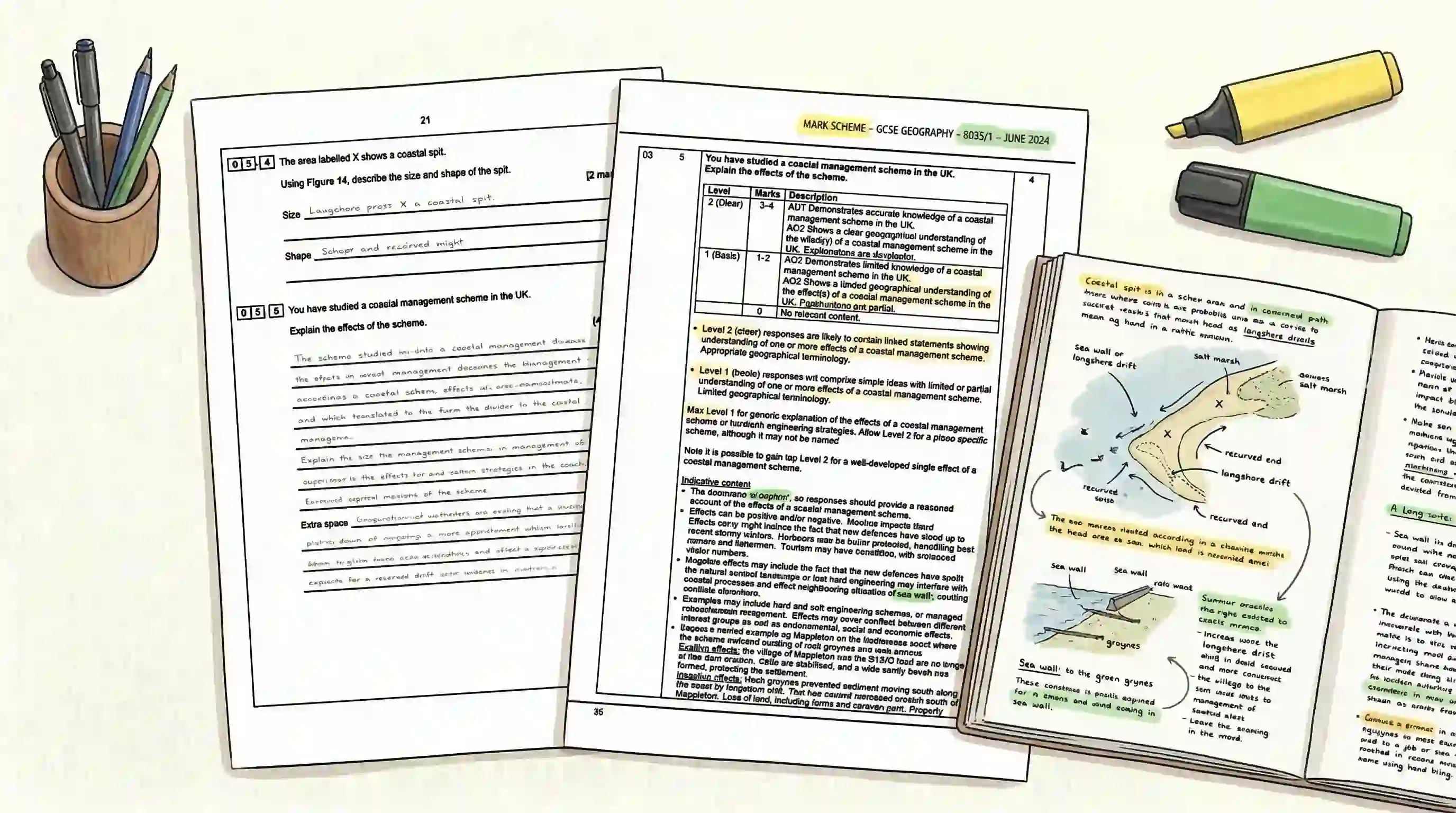
Past papers are the single most effective revision tool available to GCSE students but most students use them wrong. Done too late, too passively, or without proper review, they're just a confidence exercise with little lasting value. Done right, they're the closest thing to a guaranteed grade improvement. This guide explains exactly how to use them properly, and why the science backs it up.
Why Do Past Papers Actually Work?
The Science Behind It
The Science Behind It
This isn't just exam board advice. There's decades of cognitive science research behind it.
The act of taking a test (by itself, even without any feedback) produces large effects on learning. This "testing effect" is driven by the retrieval processes learners engage in when they answer questions, and it has led researchers to fundamentally rethink the role of testing in education.
In plain terms: the effort of trying to recall information strengthens the memory of it far more than re-reading ever does. Every time you attempt a past paper question, you're not just checking what you know, you're actively making it easier to retrieve that knowledge under pressure.
Research has shown that students who studied information by reading and then used retrieval practice performed at least 30% better in a final exam than students who did two study periods of reading instead. That's not a marginal gain. For a student sitting ten GCSEs, that difference compounds significantly across subjects.
The important thing to understand is that this works regardless of ability. Retrieval practice benefits all students, regardless of personality characteristics or working memory capacity. Past papers aren't just for strong students who already know the content, they're effective for everyone.
The Biggest Mistake Students Make
With Past Papers
Saving them for the last two weeks. It's almost universal, and it wastes most of the benefit.
Past papers work best when used repeatedly over time, not crammed at the end. Combining retrieval practice with distributed practice (spreading revision sessions over time rather than concentrating them) produces significantly greater long-term retention than either approach alone.
Using past papers from six to eight weeks out, and returning to them regularly rather than using each one once, is a meaningfully different strategy from the last-minute approach most students default to. The evidence consistently supports starting earlier.
When Should You Start Using Past Papers?
A common fear when doing past papers before you've covered all the content, is that you'll just fail them and feel worse. That fear is understandable but largely misplaced. Topic-based past paper questions are different from full papers, and you can use them earlier and more selectively.
Here's a structure that works:
- •
8–6 weeks out: Use topic-specific past paper questions alongside your content revision. Don't attempt full papers yet — use questions to test individual topics as you cover them. This is retrieval practice in its most targeted form.
- •
6–3 weeks out: Move to full timed papers, one per subject. Do them under proper exam conditions (timed, no notes, no phone). The discomfort of this is part of what makes it effective.
- •
Final 2–3 weeks: Return to topics you're consistently losing marks on. Use past paper questions, not full papers, for targeted drilling. Keep one full paper per key subject for a final confidence check in the last week.
How to Actually Use a Past Paper - Step by Step
Completing the paper is only half of it. What you do afterwards matters just as much.
Step 1 — Do It Under Proper Exam Conditions
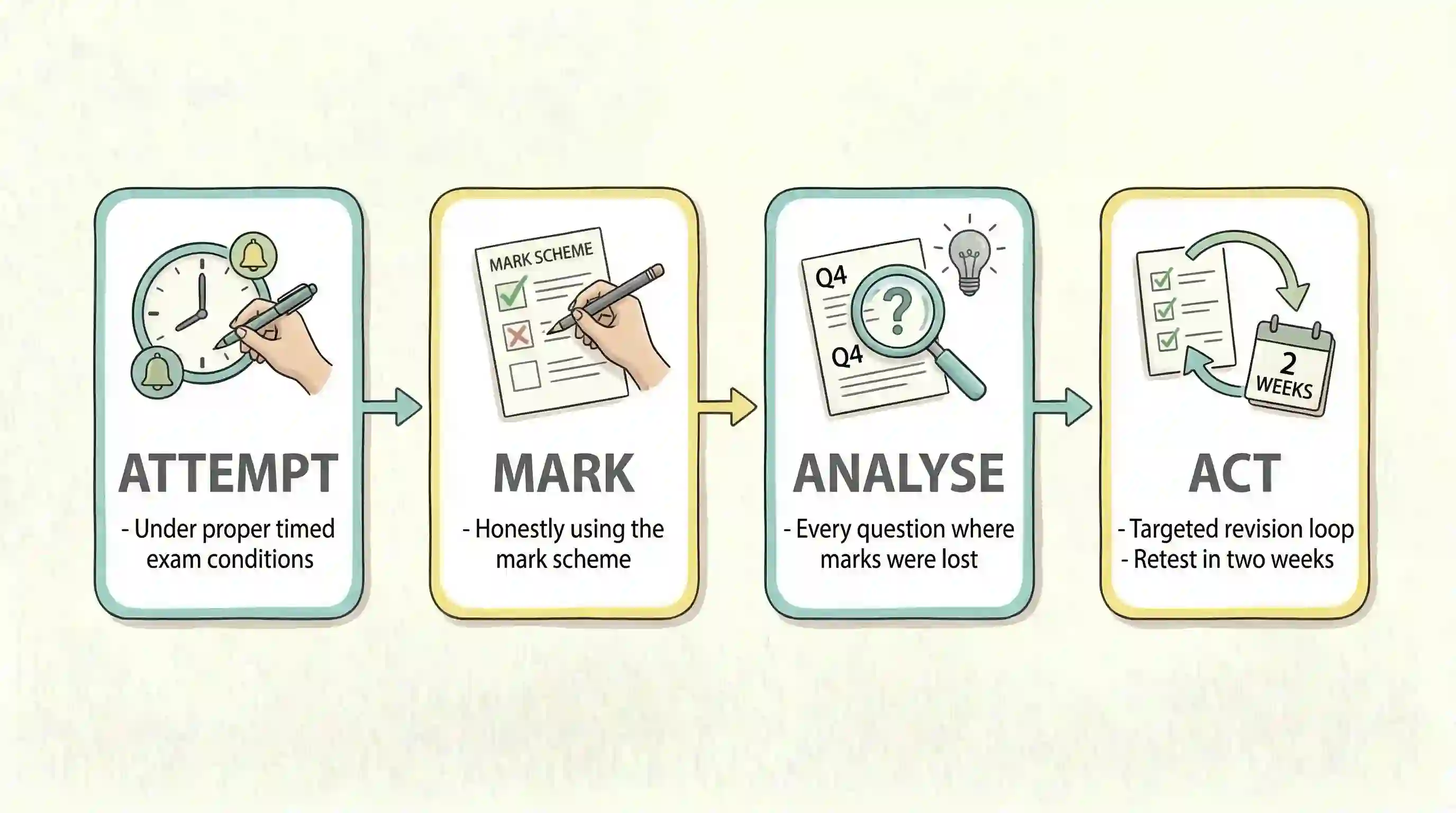
Set a timer for the exact duration of the paper. Sit somewhere quiet. No notes, no phone, no pausing. This is the part most students skip or soften, and it's the part that builds genuine exam stamina and time management skills. Attempting a paper with the mark scheme nearby, pausing when you get stuck, or taking twice the allowed time gives you a false sense of how you'd actually perform.
Step 2 — Mark It Honestly Using the Mark Scheme
Mark schemes are not just answer keys , they're the examiner's instructions on what earns marks and what doesn't. Read them carefully. Don't give yourself marks for vague answers that happen to be near the right idea. Be strict. The mark scheme shows you exactly how an examiner thinks, and that's enormously useful information.
Step 3 — Analyse Every Question You Lost Marks On
This is the step most students rush or skip entirely, and it's where most of the value actually sits. For every question where you lost marks, ask three things: Did I not know the content? Did I know it but express it badly? Did I misread the question? Each answer points to a different fix. Content gaps need more revision. Expression issues need mark scheme study and practice answers. Misread questions need to become a habit you consciously break.
Step 4 — Act on What You Find
A past paper without follow-up action is just a score. Write down the topics where you consistently drop marks and add targeted revision sessions for those topics to your plan. Then, two weeks later, test yourself on those same topics again with a different paper or question bank. That loop (identify, revise, retest) is what actually closes gaps.
How Many Past Papers Should You Do?
There's no single right answer, but here are sensible targets based on evidence and experience:
- •
Maths: As many as possible. Maths rewards repetition more than almost any other subject because the question types are consistent and technique improves with volume. Six to ten full papers per tier isn't excessive if the time is there.
- •
Sciences (Biology, Chemistry, Physics): Three to five full papers per subject. Combined Science students should use both triple and combined papers — the content overlaps significantly and doubles your available material.
- •
English Language and Literature: Three to four papers. For essay subjects, use the mark scheme and examiner reports more intensively than for other subjects — the criteria for high marks are less obvious and examiner reports spell out exactly what distinguishes a Grade 7 from a Grade 9 answer.
- •
Humanities and Languages: Three to five papers. For languages, also use individual question-type practice (listening, reading, writing, translation) as targeted drilling outside of full papers.
Don't run out of papers by doing them all in one go. Spread them across the revision period and keep at least one full paper per subject for a final mock closer to the actual exam.
GCSE past papers directory — find papers by subject and exam board
A Smarter Way to Use Past Papers: Let AI Do the Analysis for You
Marking a past paper and identifying your weak topics takes time and honest self-assessment, which is genuinely hard when you're tired and stressed. This is where using an AI revision tool alongside your past papers can make a real difference.
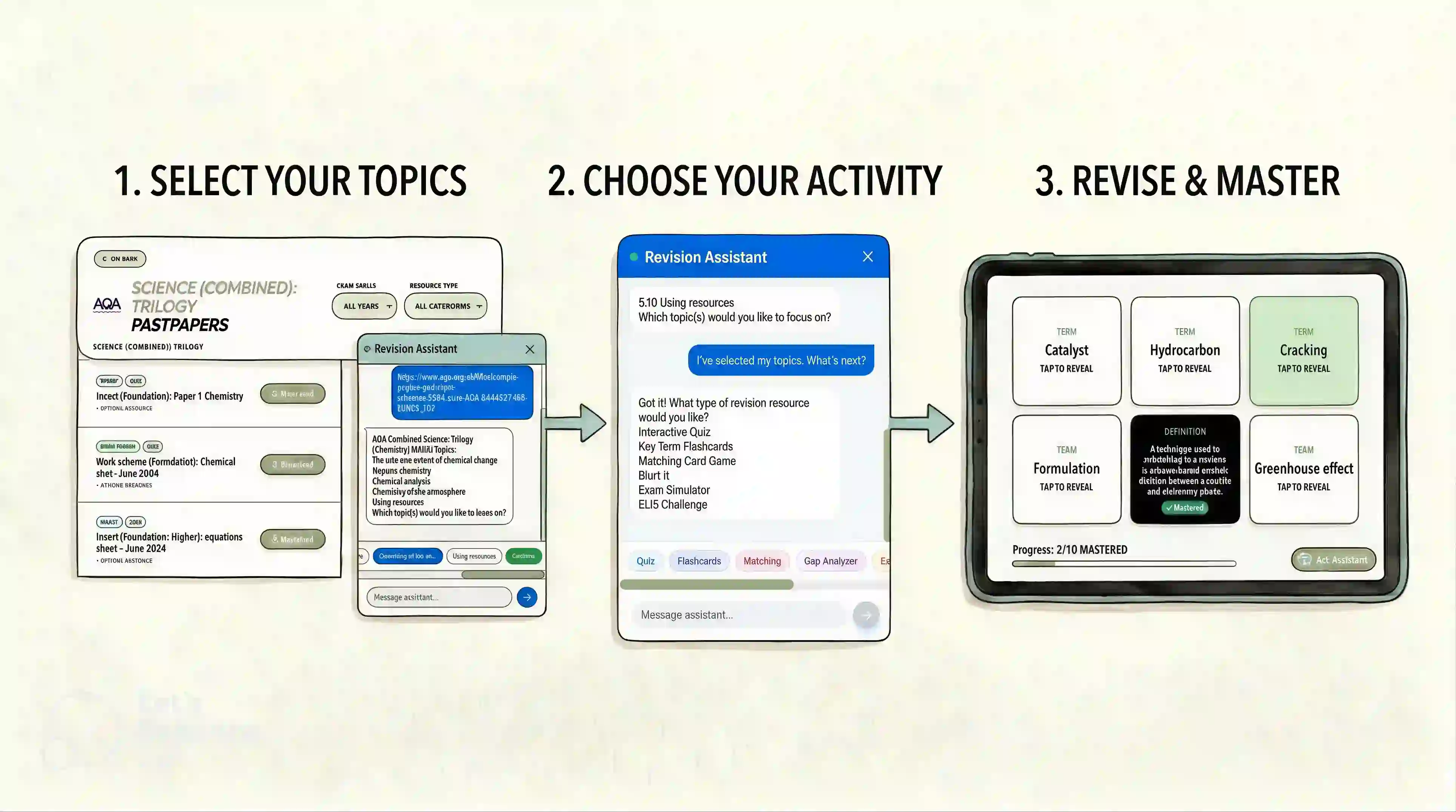
The AI Revision Assistant built into the Revision Desk past paper directory works directly alongside the papers. Drop in a mark scheme link, and the AI analyses the topics covered, asks you to select which area you want to focus on, and then gives you a choice of six revision resources it can generate instantly: an Interactive Quiz, Key Term Flashcards, a Matching Card Game, a Blurt It exercise, an Exam Simulator, or an ELI5 Challenge (that's "Explain It Like I'm 5" — useful when a concept just isn't clicking).
The point isn't to replace the past paper process. It's to make the "act on what you find" step dramatically faster and more engaging. Instead of identifying a weak topic and then having to go and find resources for it, you can go from marked paper to targeted revision activity in a few minutes.
Registered My Desk account holders get free access to try the tool. My Desk+ subscribers get unlimited access and can save every resource they create to revisit any time during revision.
👉 Try the AI Revision Assistant in the past paper directory
Signup for a "My Desk" account (free) and try yourself.
Common Past Paper Mistakes to Avoid
Using papers before you've done any content revision. Past papers test what you know. If you haven't covered the content yet, all you're practising is the experience of not knowing things. Build the knowledge first, then test it.
Reading the mark scheme before attempting the question. It feels efficient. It isn't. You need to actually retrieve the answer from memory for the process to strengthen retention.
Only doing full papers when you're short on time. In the final two weeks, topic-specific questions from past papers are often more valuable than full papers. You can target exactly where you're losing marks rather than spending 90 minutes on a paper where you're already confident on 70% of the content.
Ignoring examiner reports. These are free, published by every major exam board, and tell you precisely what common mistakes students make and what distinguishes high-scoring answers. Almost no students read them. That's an advantage you can take.
How Past Papers Fit Into Your Wider Revision Plan
Past papers aren't a substitute for content revision, they're the phase that follows it. If you haven't built a structured plan for how the two fit together, the pillar guide on planning your GCSE revision covers the full framework, including how to balance content work and past paper practice across the weeks before your exams.
How to Plan Your GCSE Revision: The Complete Guide
If you want a more structured physical framework alongside your digital revision, the GCSE Revision Diary Planner includes a mock paper performance analysis section specifically designed to help you track patterns across papers, identify topic-level weaknesses and prioritise what to revise next. It's a frequent Amazon No.1 bestseller.
👉 See the GCSE Revision Diary Planner on Amazon (opens in new tab)
Quick Summary: Using GCSE Past Papers Effectively
- 1
Start topic-based questions six to eight weeks before your first exam
- 2
Move to full timed papers from around five to six weeks out
- 3
Always use proper exam conditions — timed, no notes
- 4
Mark every paper strictly against the mark scheme
- 5
Analyse and act on every question where you lost marks
- 6
Read examiner reports for your key subjects
- 7
Use the AI Revision Assistant to turn weak topics into revision resources instantly
- 8
Keep at least one full paper per subject for a final mock in the last fortnight
👉 Find your past papers and start using the AI Revision Assistant
Start free by signing up for a "My Desk" account.
Master Your Revision
You don't need to feel lost or confused about where to begin your revision. Learn what your revision plan should look like.