
How to Plan Your GCSE Revision: The Complete Guide
Revision Strategy
Most GCSE revision advice focuses on what to study. This guide focuses on something more important: how to plan it. Students who go into exam season with a clear, personalised revision plan consistently outperform those who don't, and it's rarely because they're smarter. It's because they're better organised. Here's exactly how to build that plan from scratch.

Why Planning Your Revision
Matters More Than You Think
Matters More Than You Think

Step 1 — Know Your Exam Dates
Before You Do Anything Else
Before You Do Anything Else
- •
Your earliest exam — this tells you when serious revision needs to start
- •
Clusters — two or three exams in the same week need extra preparation
- •
Back-to-back days — consecutive exams need a specific approach (focus on the next morning's exam the night before, not the one you've just sat)
- •
Longer gaps — genuine breathing space, but only if you've planned to use them
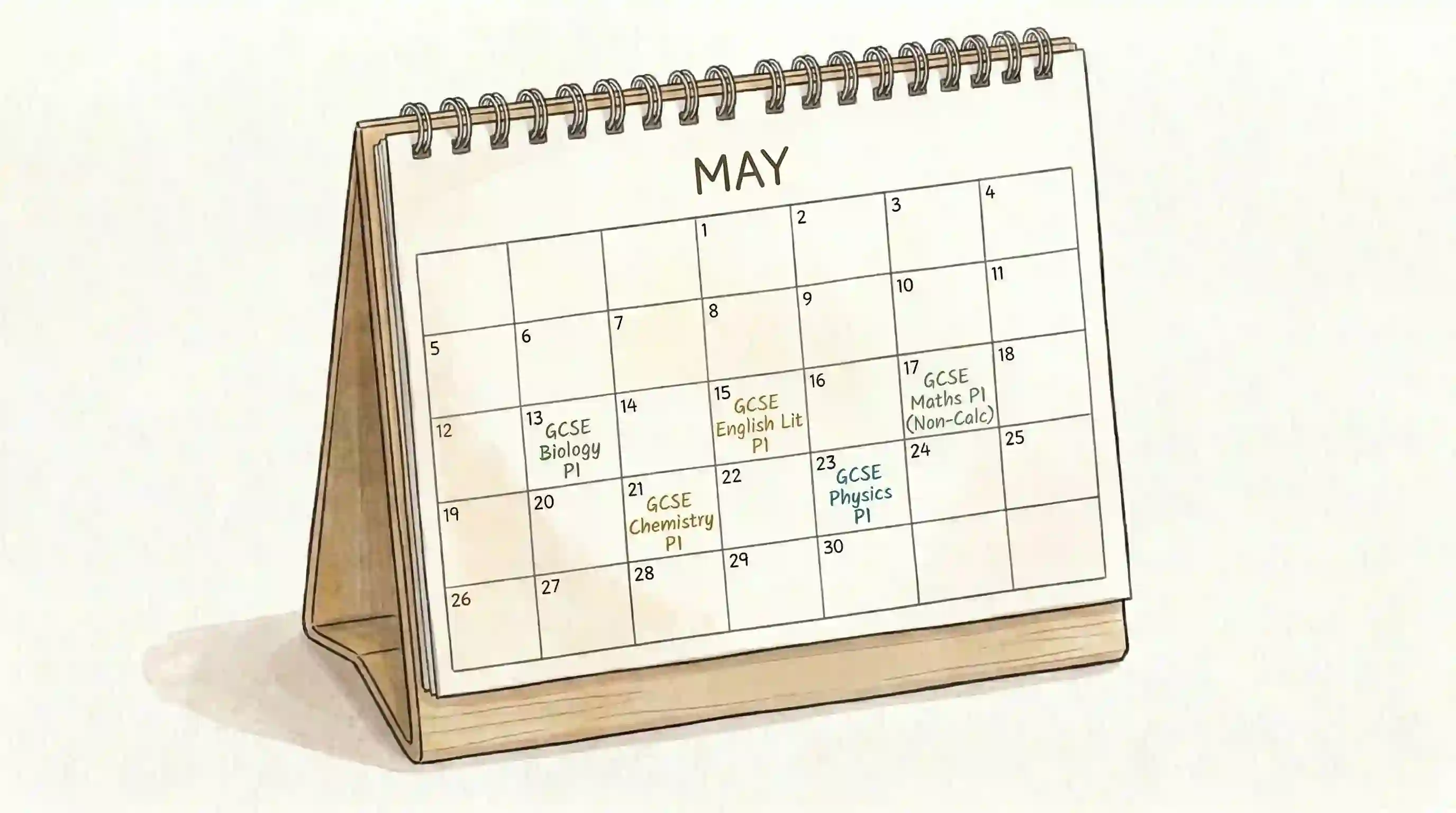
👉 Add your exam dates and view your personal GCSE timetable in calendar view
Signup for a "My Desk" account (free) and save your own exam timetable.

Step 2 — Audit Your Subjects and
Be Honest About Where You Stand
Be Honest About Where You Stand
- •
Strong — you understand most of the content and generally do well
- •
Needs work — patchy understanding, some gaps
- •
Weak — low confidence, significant gaps in knowledge

Step 3 — Work Out How Much
Time You Actually Have
Time You Actually Have
- •
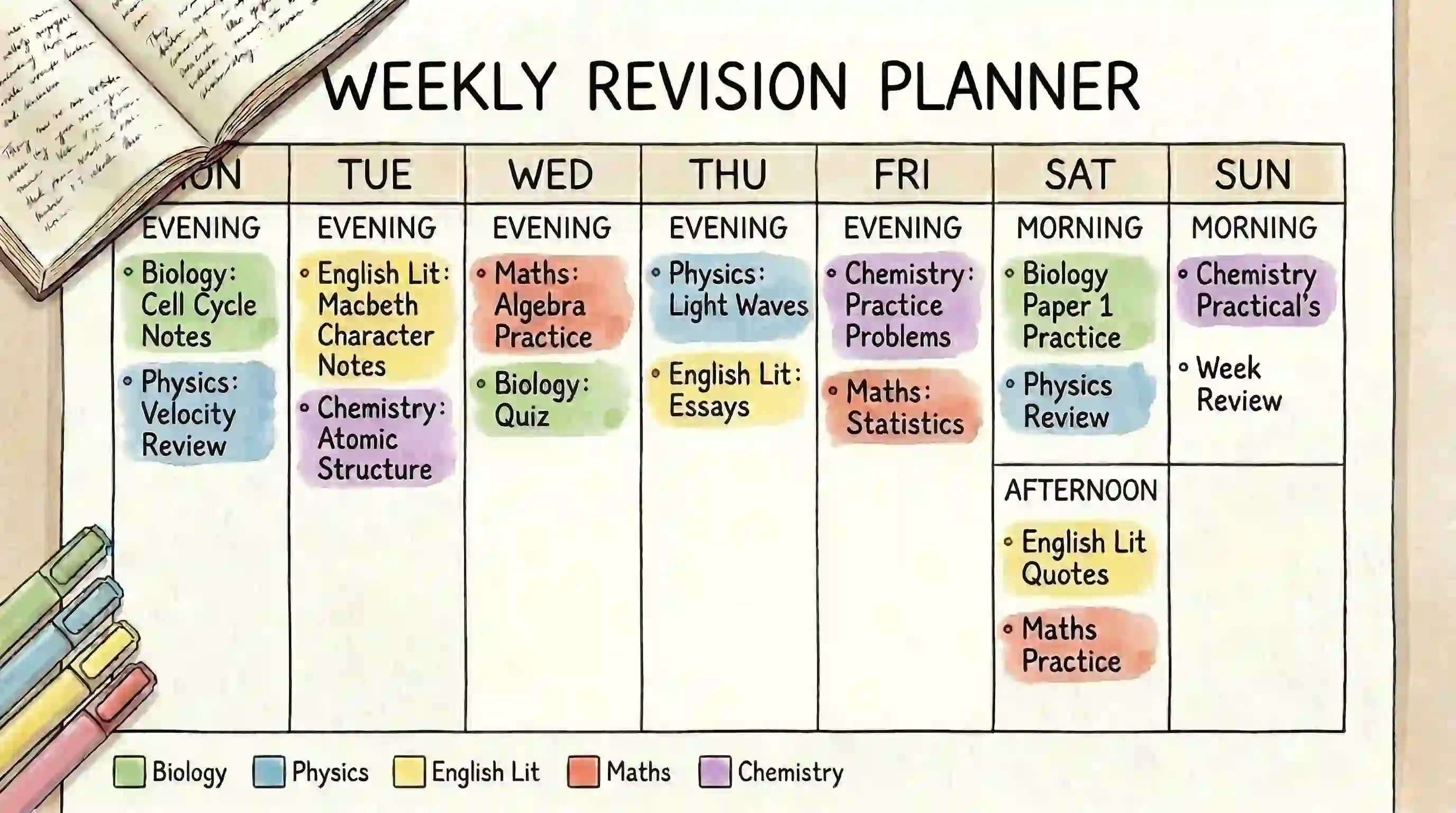
4 to 5 weekday evenings, 45 to 60 minutes each
- •
Saturday morning and Sunday afternoon, around 90 minutes each
That's roughly 6 to 7 hours a week, which is enough to make real progress without burning out before your exams have even started.

Step 4 — Allocate Your Subjects
Across Your Available Time
Across Your Available Time
Now bring your confidence ratings and your time budget together. Weaker subjects should get roughly twice the slots of subjects you're already strong in. Core subjects, particularly Maths, English Language and English Literature, tend to need more total time because of the volume of content and the number of separate papers involved.
A rough guide:
- •
Weak subject: 3 to 4 sessions per week in the early revision period
- •
Needs work: 2 to 3 sessions per week
- •
Strong subject: 1 to 2 sessions per week, building closer to the exam
Don't try to touch every subject every single day. Focusing on two or three subjects per week in real depth tends to produce better results than skimming everything lightly each evening.
The Tools That Make This Easier
Planning your revision on paper is fine. But the right tools make it considerably easier to stay on track, adapt when things change, and actually see what you've covered.
Two options worth knowing about:
For your digital timetable: Our free online tool lets you add all your subjects and exam dates, view them as a calendar, and see the full shape of your exam season at a glance. It takes about five minutes to set up and gives you a foundation to build everything else around.
👉 Build your free personalised GCSE exam timetable here
Signup for a "My Desk" account (free) and save your own exam timetable.
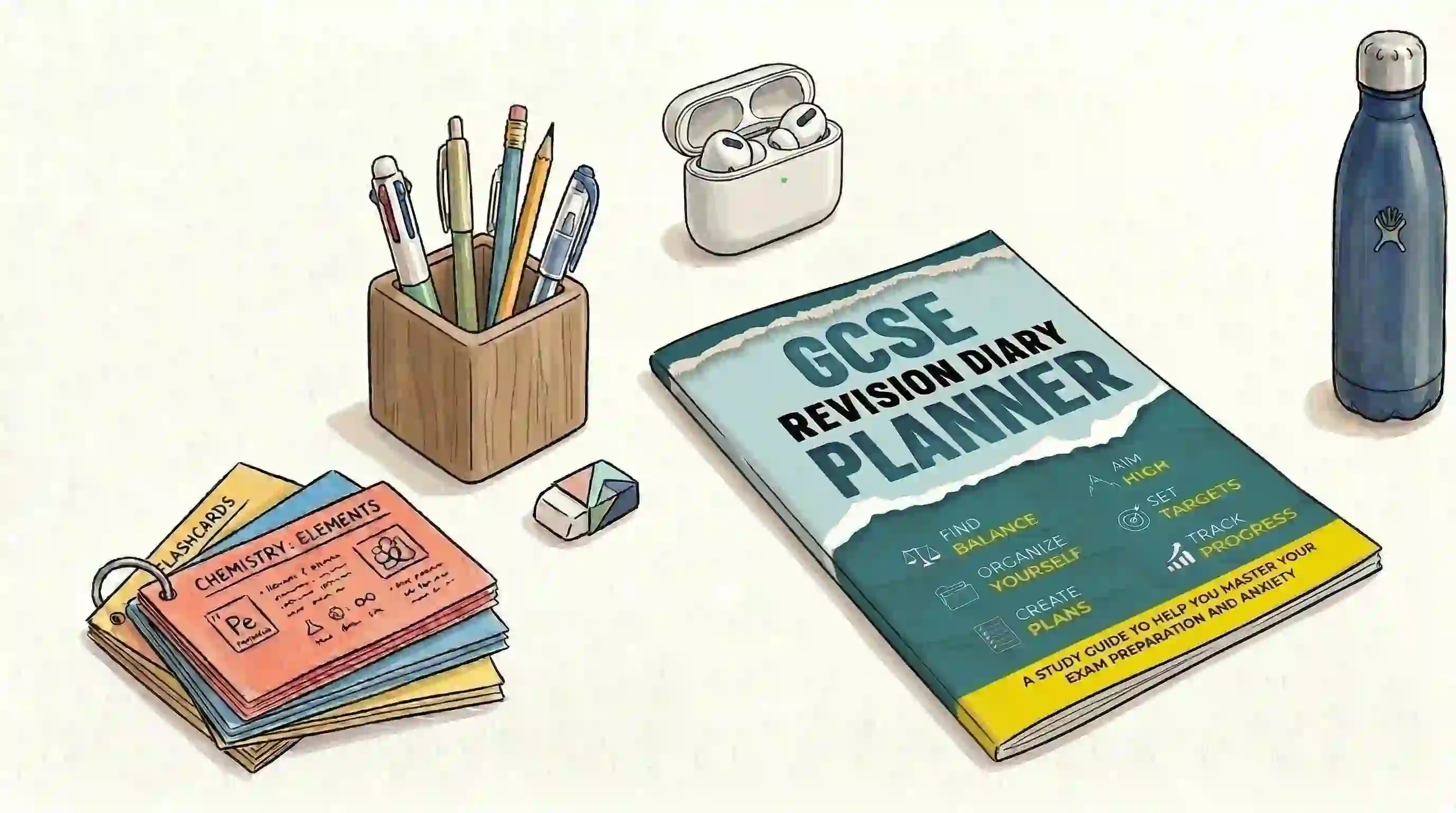
For your daily and weekly revision structure: If you want something more comprehensive to work from, the GCSE Revision Diary Planner is worth a look. Currently an Amazon No.1 bestseller, it was written by a team with over 40 years of teaching experience and is designed specifically to take you from overwhelmed to organised. Inside, you'll find space to set personal targets, completed resource lists for every subject, weekly revision schedules, daily planning pages, and a mock paper analysis section that helps you identify exactly where you're losing marks.
It's particularly useful for students who find it hard to maintain structure week to week. Rather than starting from a blank page each Sunday evening, you've got a clear framework already built in.
👉 See the GCSE Revision Diary Planner on Amazon
A planner created to help you take control of your organisation so that your revision runs smoothly.

Step 5 — Build Past Papers Into the Plan From the Start
Past papers are the most effective revision tool available, but they only work when they're used at the right point in your plan.
Here's a structure that works well:
- •
Weeks 8 to 5 before your first exam: Focus on content. Go through notes, use revision guides, fill gaps in your knowledge.
- •
Weeks 5 to 2: Move to timed past papers. Do full papers under proper exam conditions, then use the mark scheme to review every answer, not just the ones you got wrong.
- •
Final 2 weeks: Targeted practice. Use past paper questions to drill the specific topics you're still dropping marks on.
Aim for at least two to three full past papers per subject before each exam. For subjects you find difficult, four to six is a realistic and worthwhile target.
How to Keep Your Plan on Track as Exam Season Gets Closer
A revision plan isn't a contract. It's a working document. The students who use their plans most effectively are the ones who revisit and adjust them regularly as the season develops, shifting sessions when life gets in the way, adding focus to a subject after a disappointing mock, scaling back on one they've already nailed.
A few things that help with this:
- •
Review your plan every Sunday evening. Does it still reflect your priorities for the week ahead?
- •
Track what you've actually covered, not just what you planned to. Gaps are much easier to fix three weeks out than three days out.
- •
Don't scrap the plan when you fall behind. One missed evening doesn't ruin a revision plan. Abandoning the whole thing because of one missed evening is what causes real damage.
Quick Summary: The GCSE Revision Planning Process
- 1
Get your confirmed exam dates and view them as a calendar
- 2
Rate your confidence in each subject honestly
- 3
Calculate your realistic revision time budget
- 4
Allocate sessions by subject, weighted towards weaker areas
- 5
Use the right tools to stay structured (both digital and physical)
- 6
Build past papers in from around five weeks out
- 7
Review and adjust your plan weekly throughout the season